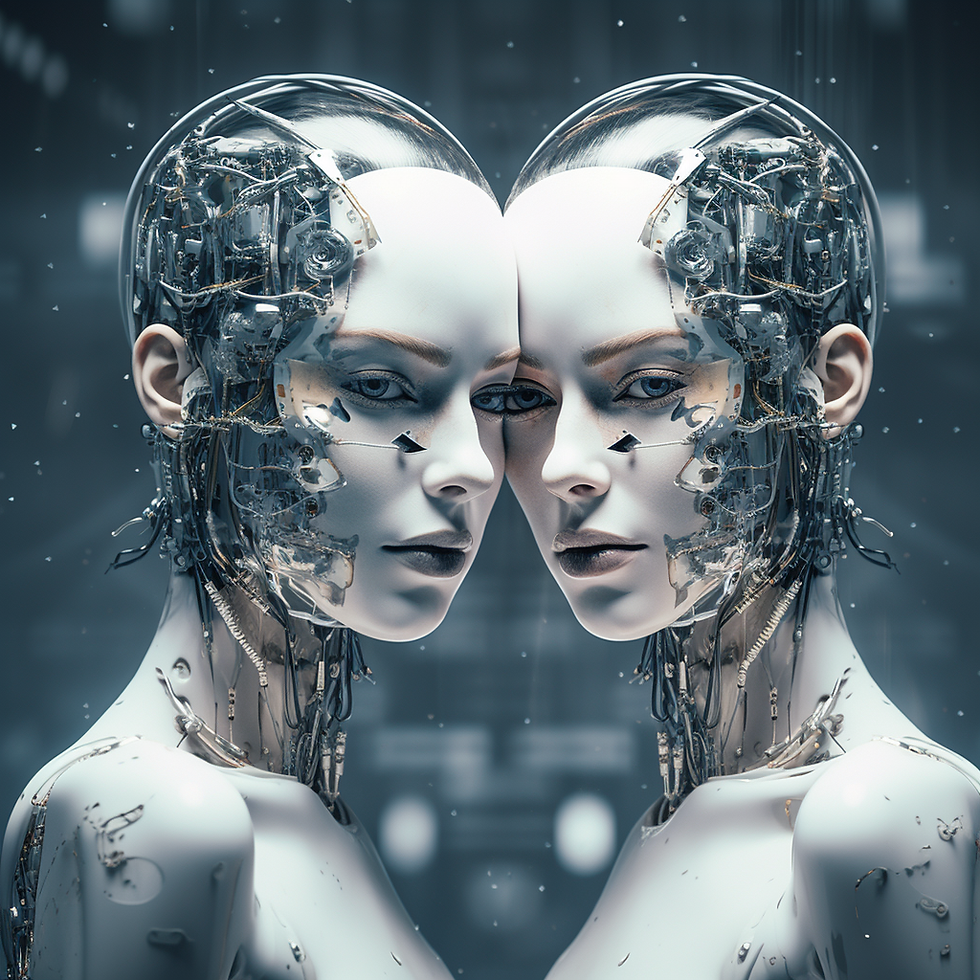

Building a Digital Clone with AI
- Joeri Pansaerts

- Oct 9, 2023
- 3 min read
In the fast-paced world of entrepreneurship, I've always been on the lookout for tools and technologies that can give me an edge. As an entrepreneur with a deep passion for the customer, I've often found myself overwhelmed with the sheer volume of tasks that need attention. Like many entrepreneurs, I've dreamt of having an assistant who could handle some of these tasks, but the challenges of training and ensuring they align with my vision have always been deterrents. That was until I stumbled upon a groundbreaking solution: building a digital twin of myself using AI.
I recently embarked on an exciting journey to create a digital version of myself, an AI-powered assistant that not only understands my business better than anyone else but can also interact with customers just as I would. And the most astonishing part? I achieved this in a mere 30 minutes, without any coding skills!
The idea of having a digital twin might sound like science fiction, but with the rapid advancements in AI, it's now a reality. Over the past couple of years, AI technologies like Chat GPT, and Bard have paved the way for creating highly refined, customized AI agents. I discovered a platform called Fine Tuner, based in Berlin, which allows individuals like me to build and train these agents without writing a single line of code.
The potential applications of such AI agents are vast. From sales assistants that can boost revenue to customer support agents that answer queries, the possibilities are endless. Imagine having a personal finance advisor or an HR recruiter available 24/7, ready to assist at a moment's notice. These agents can be integrated into websites, apps, or any digital platform, making them incredibly versatile.
Building my digital twin was a systematic process. The first step was "feeding the brain." Just like humans, AI learns from data. I provided the system with as much information as possible about my vision and the broader context of entrepreneurship. This data came from various sources, including my website, online courses, and other resources. The platform even allowed me to use a crawler to extract information from web pages, ensuring that my digital twin had a comprehensive knowledge base.
The next step was defining the role and profile of my AI agent. I named it "Jury AI," envisioning it as a friendly customer support representative. I provided details about my company and set specific conversation settings to ensure the AI would interact with customers in a manner consistent with my brand's voice and values.
But having an AI that can talk is not enough. It needs to act. In the third step, I empowered my digital twin with tasks and actions. From recognizing customer stages based on their queries to extracting specific values like names or emails, the capabilities were vast. The platform even allowed integrations with external tools, enabling the AI to send emails, schedule calls, or update CRM systems.
After setting up and training my AI, it was time for the moment of truth: testing. I engaged in a simulated conversation with my digital twin, and the results were astounding. It responded just as I would, guiding customers towards our products and services. With a few tweaks and adjustments, I was confident in its abilities.
The journey of building my digital twin has been nothing short of revolutionary. In just 30 minutes, I was able to harness the power of AI to create a tool that not only alleviates my workload but also enhances the customer experience.
For entrepreneurs like me, this is just the beginning. The fusion of AI and entrepreneurship promises a future where our digital counterparts will work alongside us, ushering in an era of unparalleled efficiency and innovation. As I continue on my entrepreneurial journey, I'm excited about the limitless possibilities that lie ahead.